Lexical Mapping in Teletandem: Analysing Multilingual Dynamics in Synchronous Interactions
UNICAMP/CAPES-COFECUB, Brazil
Abstract
Code-switching is a relevant phenomenon in synchronous bilingual interaction mediated by a computer, especially in the context of Teletandem practice, which is the focus of this research. Based on studies that discuss the principles of language separation and reciprocity in the context of the Teletandem project (Leone et al., 2024; Lima-Lopes & Aranha, 2023; Satar et al., 2024), this research aims to observe lexical intrusion in Teletandem sessions conducted between Brazilian and US students. Our main objectives are: 1) to analyse which languages are present in code-switching and their proportion; 2) to compare the behaviour of interactants in terms of their code-switching, and 3) to verify at what moment of the Teletandem sessions the changes occur. The corpus is a set of 203 Teletandem interactions (Portuguese in English), part of the MulTeC (Multimodal Teletandem Corpus) compiled and kept by the Teletandem project at UNESP-IBILCE. The lexical intrusion metrics were inspired by Gambäck and Das (2016), who propose to analyse the presence of language alternation based on the lexicon. Their approach is implemented by considering a language to be the basis for the interaction, which, in this case, is the one to which the learners should prioritize during language separation, comparing its proportion with the others present. Additionally, Gambäck and Das (2016) also bring calculations that help determine in which moments code-switching takes place in the interaction. In our research, lexicon was classified automatically, using the Hunspell language package (Ooms, 2025), being latter manually reviewed by the authors. Partial results show that the use of other languages than the target is present. The main focus of intrusion is on that native to the participants, and with less significant occurrence of other languages, such as Spanish, more commonly used by US speakers, Italian, French and German, those being less frequent.
Bionote
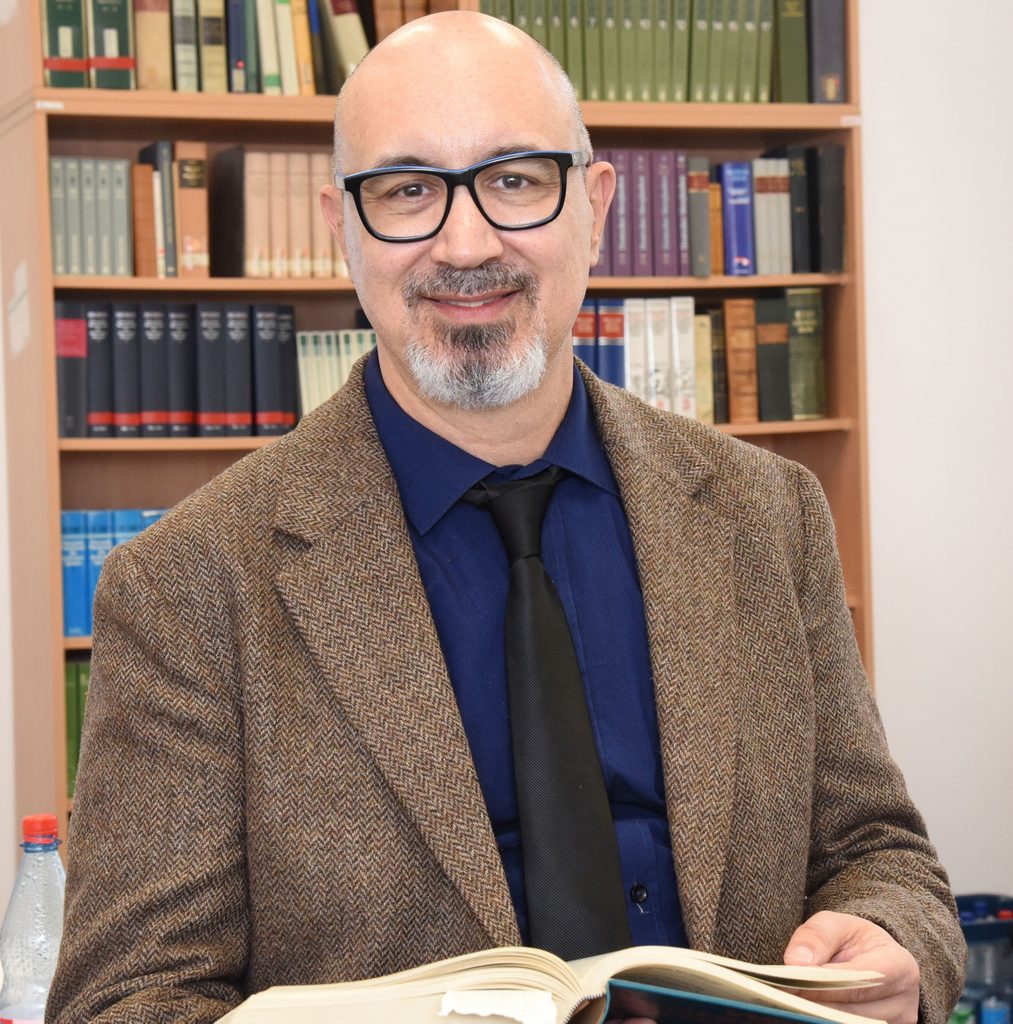
Rodrigo Esteves de Lima Lopes is an Associate Professor at the Institute of Language Studies (IEL) at the University of Campinas (UNICAMP). His research interests include Systemic Functional Linguistics, Corpus Linguistics, and Digital Humanities. His work focuses on political discourse, media, society, and technology, with particular emphasis on textual corpora and the development of computational resources for linguistic research. He is a CNPq Research Productivity Fellow, leader of the MíDiTeS (Media, Technology and Society) research group, and coordinator of the PH2D Research Centre (Posthumanism and Digital Humanities).